
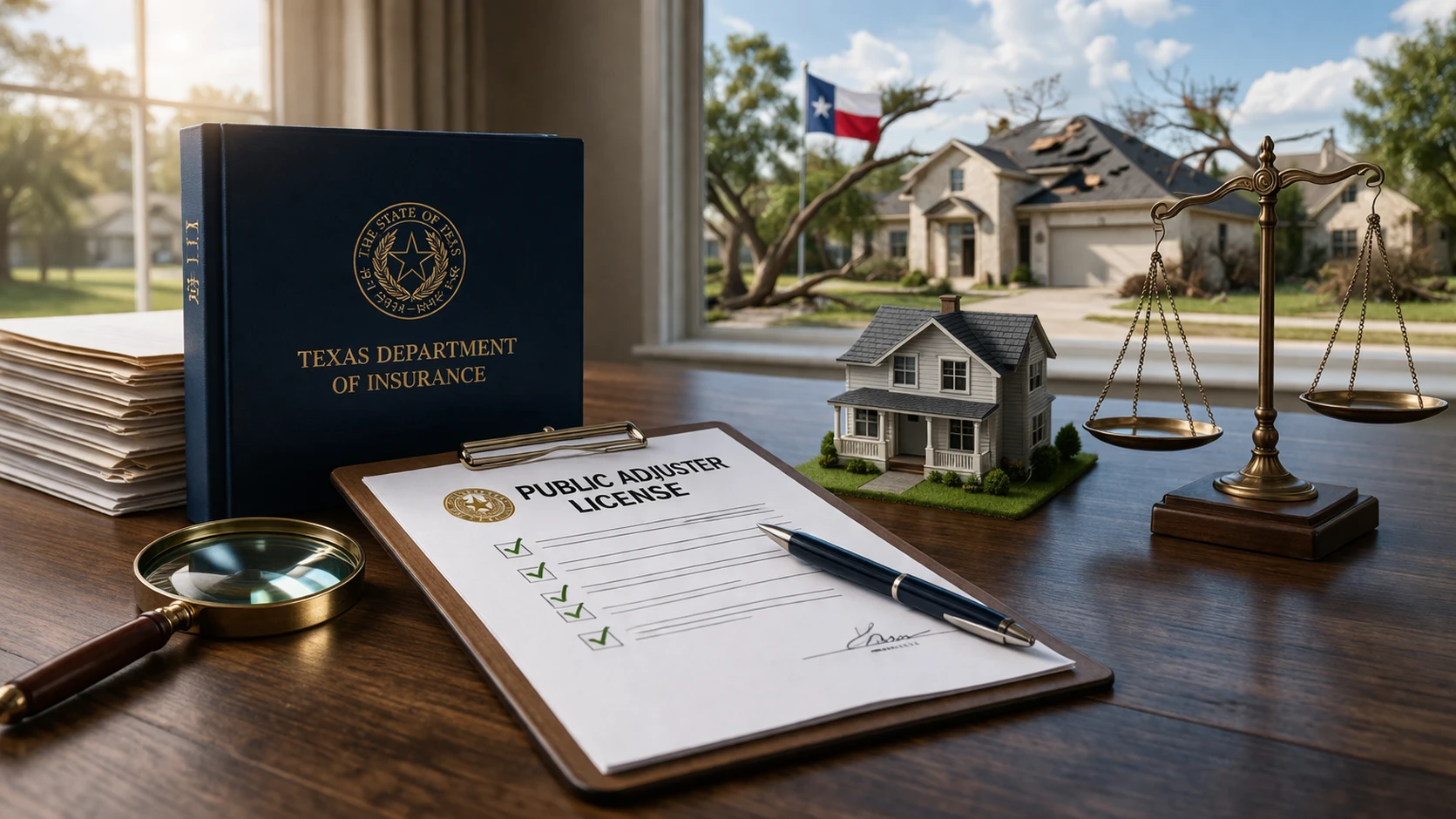
Introduction
When you hire someone to handle your insurance claim, you’re putting serious trust on the table. Money, timelines, your home—it’s all tied together. So naturally, one question rises fast: who regulates public adjusters?
It’s not just a technical detail. It’s protection. And it’s leverage. And in places like Pflugerville, Texas—where storms, hail, and property damage claims are part of life—it can be the difference between a smooth recovery and a frustrating battle.
I’ve seen homeowners assume all adjusters operate under the same rules. That’s not true. Regulation exists—but it’s layered, state-driven, and very specific. And if you understand it, you instantly gain an edge.
Let’s break it down clearly. No fluff. Just what you need to know.
The Short Answer: Who Regulates Public Adjusters?
Here it is, straight:
Public adjusters are regulated at the state level.
That means there is no single national authority overseeing them. Instead, each state has its own rules, licensing systems, and enforcement bodies.
In Texas, the answer to who regulates public adjusters is:
The Texas Department of Insurance (TDI)
They are the gatekeepers. The enforcers. The ones who decide who gets licensed—and who loses that license.
If you live in Pflugerville, this is the agency that protects you.
What Is a Public Adjuster—and Why Regulation Even Matters

Before we go deeper, let’s get clear on roles.
A public adjuster works for you—the policyholder. Not the insurance company.
Compare that to:
- Staff Adjuster – works directly for the insurance company
- Independent Adjuster – contracted by insurance companies
- Public Adjuster – hired by you to maximize your claim
Sounds great, right? It is. But here’s the catch…
Without regulation, anyone could claim to be an expert. Anyone could negotiate on your behalf. And that opens the door to abuse.
That’s exactly why understanding who regulates public adjusters matters.
Regulation ensures:
- Ethical behavior
- Transparent pricing
- Proper licensing
- Accountability when things go wrong
No regulation = chaos. With regulation = structure and protection.
Who Regulates Public Adjusters in Texas?
Let’s zoom in.
In Texas, the Texas Department of Insurance (TDI) oversees everything related to public adjusters.
Here’s what they actually do:
- Issue licenses to qualified adjusters
- Enforce insurance laws across the state
- Investigate complaints from consumers
- Discipline or revoke licenses when needed
- Monitor compliance with fee limits and contracts
They operate under the Texas Insurance Code and administrative rules designed to protect homeowners—not adjusters.
For Pflugerville residents, this matters more than you might think. Rapid growth in Central Texas means more claims, more contractors, and yes—more adjusters entering the market.
Some are excellent. Some… not so much.
TDI exists to separate the two.
Licensing Requirements for Public Adjusters in Texas
Not just anyone can wake up and become a public adjuster in Texas. There’s a process—and it’s strict.
Here’s a simplified breakdown:
To Get Licensed, an Adjuster Must:
- Submit an official application to TDI
- Pass a background check
- Meet eligibility requirements
- Pay licensing fees
- Complete any required training or exams
Ongoing Requirements:
- Maintain an active license
- Complete continuing education
- Follow state laws and ethical standards
Bond Requirement (Important!)
Public adjusters in Texas must carry a surety bond.
Why does that matter?
Because it protects you. If the adjuster acts improperly, there’s a financial safety net in place.
So when you’re asking who regulates public adjusters, remember—it’s not just about oversight. It’s about setting barriers that keep unqualified people out.
Rules Public Adjusters Must Follow (And Yes, There Are Many)
This is where regulation gets real.
Public adjusters in Texas must follow strict rules. Break them, and they risk fines—or losing their license entirely.
Key Rules Include:
1. Written Contracts Are Mandatory
- Must clearly outline services
- Must state the fee structure
- Must be signed before work begins
2. Fee Limits Apply
- Typically based on a percentage of the claim
- Cannot exceed state-defined limits
3. No Misleading Claims
- No “guaranteed payouts”
- No exaggerating damages
4. Ethical Conduct
- No conflicts of interest
- Must act in the policyholder’s best interest
5. Restrictions After Disasters
- There are rules about how and when they can solicit clients
That’s regulation in action.
It’s not just theoretical—it shapes how adjusters behave in real-world situations.
How Complaints and Violations Are Handled
Let’s say something goes wrong.
You hire an adjuster. Communication drops. Fees feel off. Or worse—something doesn’t seem right.
Now what?
This is where understanding who regulates public adjusters becomes incredibly useful.
Step-by-Step Process:
- File a Complaint with TDI
- TDI Reviews and Investigates
- They Request Documentation
- They Determine Violations (if any)
Possible Outcomes:
- Warning or corrective action
- Financial penalties
- License suspension
- Permanent revocation
The system isn’t perfect—but it works. And it gives homeowners a path to push back.
Federal Oversight vs State Regulation
You might be wondering—where does the federal government fit into all this?
Short answer: not much.
Insurance—and by extension, public adjusters—is primarily regulated at the state level.
Federal agencies may influence broader insurance practices, but they don’t directly license or control public adjusters.
This decentralized system actually makes understanding who regulates public adjusters even more important, because the answer changes depending on where you live.
How to Verify a Public Adjuster’s License in Texas
This is one of the most actionable steps you can take. And honestly? Not enough people do it.
Before hiring anyone, verify their license.
Here’s How:
- Visit the Texas Department of Insurance website
- Use the license lookup tool
- Enter the adjuster’s name or license number
What to Check:
| Item | Why It Matters |
| License Status | Must be active |
| Expiration Date | Avoid expired licenses |
| Disciplinary History | Look for red flags |
| License Type | Confirm they are a public adjuster |
It takes five minutes. It can save you thousands.
Red Flags That Should Stop You Immediately
Even with regulation, bad actors exist.
Here are warning signs you should never ignore:
- Refuses to provide a license number
- Pressures you to sign quickly
- Asks for large upfront payments
- Promises unrealistic claim results
- Avoids written contracts
If you see even one of these, pause.
Regulation only works if you actively use it as a filter.
Why Regulation Matters for Pflugerville Homeowners
Pflugerville isn’t just growing—it’s expanding fast. New homes. New developments. More insurance claims every year.
And with that comes opportunity—for both professionals and opportunists.
Think about common scenarios:
- Hail damage after a storm
- Water damage from plumbing issues
- Roof claims after severe weather
In these moments, decisions happen quickly. Stress is high. And that’s when mistakes are most likely.
Understanding who regulates public adjusters gives you a framework to slow down and make smarter choices.
It ensures:
- Fair claim handling
- Transparent pricing
- Legal accountability
In short, it protects your home—and your financial recovery.
The Role of Professional Associations

You might hear about organizations like the National Association of Public Insurance Adjusters (NAPIA).
These groups matter—but in a different way.
What They Do:
- Provide training and education
- Promote ethical standards
- Support industry professionals
What They Don’t Do:
- Issue licenses
- Enforce laws
- Penalize violations
That’s the key distinction.
Associations guide.
Regulators enforce.
Actionable Tips Before Hiring a Public Adjuster
Let’s bring this down to real action. Here’s what I recommend every homeowner do—especially in Pflugerville.
Your Pre-Hiring Checklist:
- Verify the license with TDI
- Ask for recent client references
- Review the contract line by line
- Understand the fee percentage
- Avoid signing under pressure
- Keep copies of everything
Simple steps. Powerful results.
Final Thoughts: Knowledge Is Your Strongest Protection
At the end of the day, knowing who regulates public adjusters isn’t just about compliance—it’s about control.
When you understand the system, you stop guessing. You start verifying. You make decisions with confidence.
And in a place like Pflugerville, where property claims are part of life, that confidence matters.
You don’t need to be an expert. You just need to know where the guardrails are—and how to use them.
That’s how you protect your home. And your outcome.
FAQs
Public adjusters in Texas are regulated by the Texas Department of Insurance (TDI), which handles licensing, enforcement, and consumer protection.
Knowing who regulates public adjusters helps you verify credentials, avoid scams, and ensure you’re working with a licensed professional.
Yes, all public adjusters must be licensed by the Texas Department of Insurance to legally operate in the state.
You can check their license status through the Texas Department of Insurance’s online license lookup tool.
They may face fines, suspension, or permanent loss of their license depending on the severity of the violation.
Yes, fees are typically capped as a percentage of the insurance claim and must be clearly outlined in a written contract.
No, acting as a public adjuster without a valid license is illegal and can result in penalties.
No, each state has its own regulatory agency and rules governing public adjusters.
You can file a complaint with the Texas Department of Insurance, which will investigate and take appropriate action.
Yes, they must follow strict ethical and legal guidelines, including transparency, honesty, and acting in the policyholder’s best interest.